Shopping cart
Your cart empty!

Your cart empty!
Terms of use dolor sit amet consectetur, adipisicing elit. Recusandae provident ullam aperiam quo ad non corrupti sit vel quam repellat ipsa quod sed, repellendus adipisci, ducimus ea modi odio assumenda.
Lorem ipsum dolor sit amet consectetur adipisicing elit. Sequi, cum esse possimus officiis amet ea voluptatibus libero! Dolorum assumenda esse, deserunt ipsum ad iusto! Praesentium error nobis tenetur at, quis nostrum facere excepturi architecto totam.
Lorem ipsum dolor sit amet consectetur adipisicing elit. Inventore, soluta alias eaque modi ipsum sint iusto fugiat vero velit rerum.
Sequi, cum esse possimus officiis amet ea voluptatibus libero! Dolorum assumenda esse, deserunt ipsum ad iusto! Praesentium error nobis tenetur at, quis nostrum facere excepturi architecto totam.
Lorem ipsum dolor sit amet consectetur adipisicing elit. Inventore, soluta alias eaque modi ipsum sint iusto fugiat vero velit rerum.
Dolor sit amet consectetur adipisicing elit. Sequi, cum esse possimus officiis amet ea voluptatibus libero! Dolorum assumenda esse, deserunt ipsum ad iusto! Praesentium error nobis tenetur at, quis nostrum facere excepturi architecto totam.
Lorem ipsum dolor sit amet consectetur adipisicing elit. Inventore, soluta alias eaque modi ipsum sint iusto fugiat vero velit rerum.
Sit amet consectetur adipisicing elit. Sequi, cum esse possimus officiis amet ea voluptatibus libero! Dolorum assumenda esse, deserunt ipsum ad iusto! Praesentium error nobis tenetur at, quis nostrum facere excepturi architecto totam.
Lorem ipsum dolor sit amet consectetur adipisicing elit. Inventore, soluta alias eaque modi ipsum sint iusto fugiat vero velit rerum.
Do you agree to our terms? Sign up
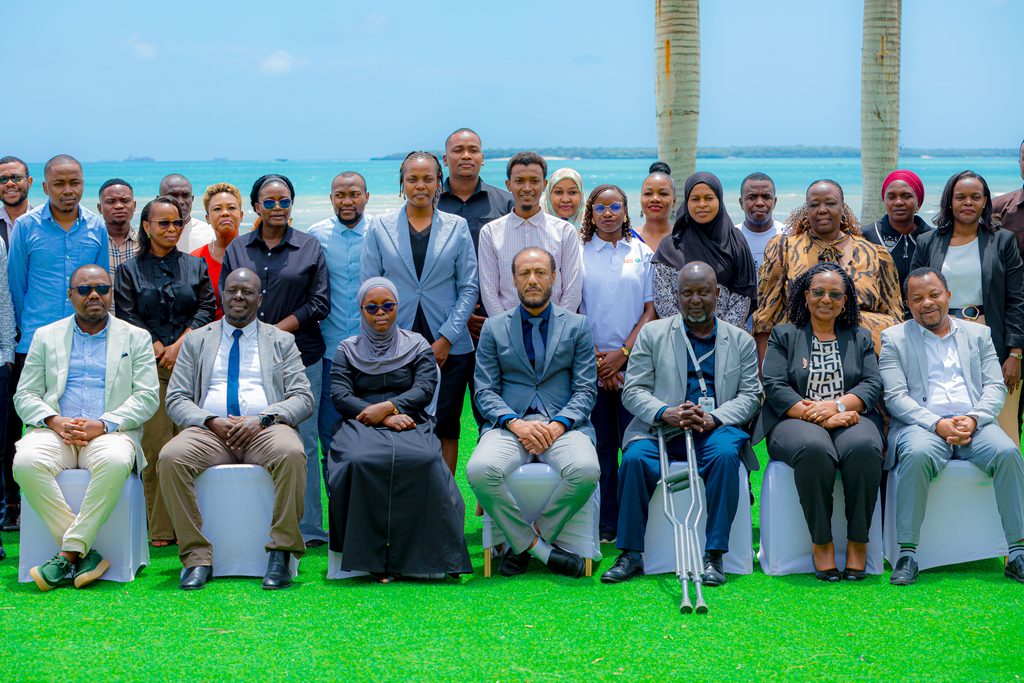
Tanzania is stepping up calls for coordinated ocean management as the country seeks to protect its marine resources, which support millions of livelihoods, contribute to food security and offer significant opportunities for economic growth.
The call was made during the Second Tanzania Ocean Governance Forum at Ramada Hotel in Dar es Salaam, where government officials, environmental experts, researchers and development partners discussed ways to strengthen marine conservation and accelerate the sustainable development of the Blue Economy.
The importance of effective ocean governance is underscored by Tanzania’s extensive maritime resources. According to the Nairobi Convention, the country has a coastline stretching approximately 1,424 kilometres and an Exclusive Economic Zone covering about 223,000 square kilometres in the Indian Ocean.
These resources support fisheries, tourism, seaweed farming and other economic activities, but face growing pressures from illegal fishing, marine pollution, climate change and competing demands for ocean space.
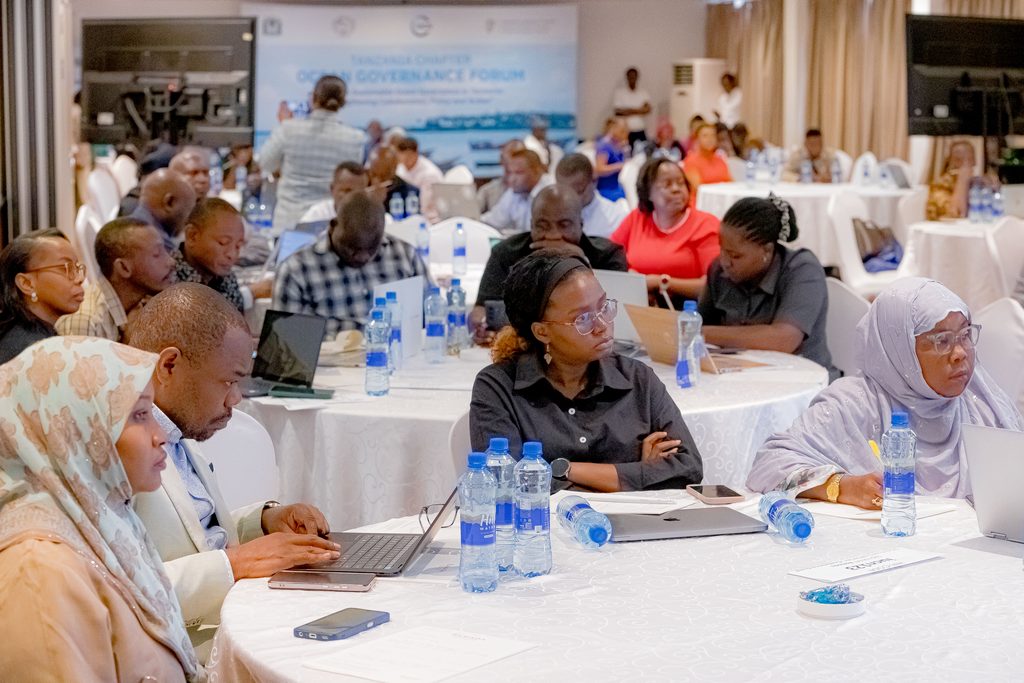
Speaking at the forum, Zahor Kassim, Deputy Principal Secretary in Zanzibar’s Ministry of Blue Economy and Fisheries, said closer cooperation between Mainland Tanzania and Zanzibar was essential because marine ecosystems and environmental challenges extend beyond administrative boundaries.
“Cooperation between Mainland Tanzania and Zanzibar is not optional; it is necessary,” he said, calling for a coordinated approach to marine resource management.
The economic stakes are significant. According to the Food and Agriculture Organization of the United Nations (FAO), Tanzania’s average annual fish production reached approximately 472,579 tonnes in 2024, valued at TSh 2.94 trillion. More than 400,000 fisheries operators are directly employed, while over four million people work in fisheries-related activities.
Fish also plays a major role in nutrition, providing approximately 30% of the country’s animal protein intake, according to FAO.
These figures highlight the importance of sustainable fisheries management to livelihoods, food security and economic development.
Representing the Office of the Vice President, an official said the government was continuing to coordinate the Marine Spatial Planning process to organize different ocean activities, reduce conflicts and protect marine ecosystems.
The official also highlighted existing legal and policy frameworks, including the Environmental Management Act of 2004, the Fisheries Act of 2003 and the Marine Parks and Reserves Act of 1994, alongside the National Blue Economy Policy adopted in 2024.
Meanwhile, Joseph Olila, IUCN Tanzania’s Programme Manager for Coastal and Ocean Resilience, called for stronger institutional coordination and decisions informed by scientific evidence.
Olila said the forum was established in February 2025 after more than 130 stakeholders recognized the need for a permanent platform bringing together government institutions, researchers, civil society, the private sector and coastal communities.
He stressed that investment in the Blue Economy must go hand in hand with conservation, warning that economic activities could undermine their own long-term potential if marine habitats were degraded.
“Conservation and development are not two competing agendas. When properly managed, they are two sides of the same coin,” Olila said.
The economic opportunities extend beyond fishing. FAO data show that seaweed farming employs approximately 25,000 people in Tanzania, around 80% of whom are women, making the activity an important source of income for coastal communities.
Marine tourism is another potential growth area. According to Tanzania’s 2024 Economic Survey, marine reserves received 49,108 visitors in 2024, compared with 42,696 in 2023. Revenue increased from approximately TSh 2.01 billion to TSh 2.73 billion over the same period.
The figures demonstrate the potential for well-managed marine ecosystems to generate income while supporting conservation.
The two-day forum, held under the theme “Our Ocean, Our Heritage,” is reviewing progress in fisheries, marine spatial planning, tourism, biotechnology, blue carbon and conservation.

Participants are expected to identify practical measures to improve coordination between institutions, strengthen Tanzania’s participation in regional and international ocean discussions, and ensure that research informs policy decisions.
The discussions are also expected to contribute to Tanzania’s Development Vision 2050 and Zanzibar’s Development Vision 2050, with an emphasis on balancing economic growth, community welfare and environmental protection.
Organizers have called on participants to develop clear priorities, assign implementation responsibilities and establish mechanisms for monitoring progress, ensuring that the forum’s recommendations translate into concrete action.
For Tanzania, the challenge is not simply how to expand the Blue Economy, but how to ensure that economic opportunities do not come at the expense of the marine ecosystems on which future prosperity depends.