Shopping cart
Your cart empty!

Your cart empty!
Terms of use dolor sit amet consectetur, adipisicing elit. Recusandae provident ullam aperiam quo ad non corrupti sit vel quam repellat ipsa quod sed, repellendus adipisci, ducimus ea modi odio assumenda.
Lorem ipsum dolor sit amet consectetur adipisicing elit. Sequi, cum esse possimus officiis amet ea voluptatibus libero! Dolorum assumenda esse, deserunt ipsum ad iusto! Praesentium error nobis tenetur at, quis nostrum facere excepturi architecto totam.
Lorem ipsum dolor sit amet consectetur adipisicing elit. Inventore, soluta alias eaque modi ipsum sint iusto fugiat vero velit rerum.
Sequi, cum esse possimus officiis amet ea voluptatibus libero! Dolorum assumenda esse, deserunt ipsum ad iusto! Praesentium error nobis tenetur at, quis nostrum facere excepturi architecto totam.
Lorem ipsum dolor sit amet consectetur adipisicing elit. Inventore, soluta alias eaque modi ipsum sint iusto fugiat vero velit rerum.
Dolor sit amet consectetur adipisicing elit. Sequi, cum esse possimus officiis amet ea voluptatibus libero! Dolorum assumenda esse, deserunt ipsum ad iusto! Praesentium error nobis tenetur at, quis nostrum facere excepturi architecto totam.
Lorem ipsum dolor sit amet consectetur adipisicing elit. Inventore, soluta alias eaque modi ipsum sint iusto fugiat vero velit rerum.
Sit amet consectetur adipisicing elit. Sequi, cum esse possimus officiis amet ea voluptatibus libero! Dolorum assumenda esse, deserunt ipsum ad iusto! Praesentium error nobis tenetur at, quis nostrum facere excepturi architecto totam.
Lorem ipsum dolor sit amet consectetur adipisicing elit. Inventore, soluta alias eaque modi ipsum sint iusto fugiat vero velit rerum.
Do you agree to our terms? Sign up
By Maria Ukhotya
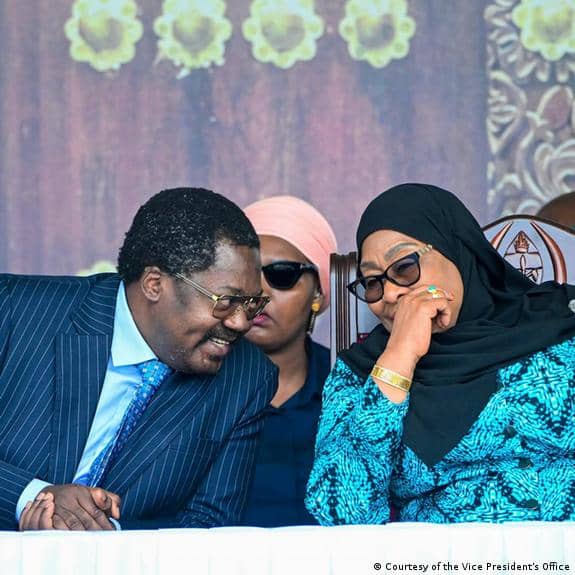
The resignation of Tanzania’s Vice President, Emmanuel Nchimbi, has renewed attention on a series of leadership changes within the country’s political establishment since President Samia Suluhu Hassan came to power in 2021.
During this period, Tanzania has witnessed changes in the offices of the Vice President, Prime Minister and Speaker of Parliament, alongside significant changes within the ruling Chama Cha Mapinduzi (CCM).
The circumstances surrounding these departures have not been the same.
Some leaders retired. Others changed their political plans, while some left office after publicly disagreeing with the authorities.
Taken together, however, these developments have raised questions about Tanzania’s changing political landscape and the rapid shifts that can occur within its senior leadership.
Nchimbi has announced that he will resign from the position of Vice President effective September 4, 2026, and retire from both politics and public service.
In his letter to President Samia, he cited constitutional provisions allowing him to step down.
But one part of his statement has attracted particular attention.
Nchimbi said that when he agreed to become President Samia’s running mate in the 2025 elections, he made a commitment to step aside if the President wanted to make changes.
“I am convinced beyond doubt that the Honourable President desires change, and therefore I have decided to fulfil my promise.”
His statement has since triggered debate over what his departure could mean for Tanzania’s political landscape.
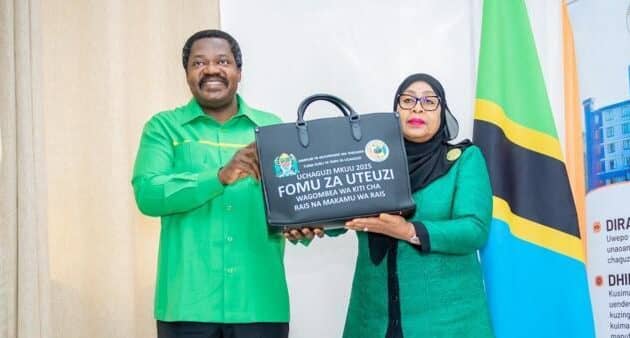
Nchimbi succeeded Philip Mpango, who became President Samia’s first Vice President following the death of President John Magufuli in March 2021.
PHILIP MPANGO’S DEPARTURE
Mpango was widely seen as a calm politician who largely stayed away from intense political debates.
For a long time, it was expected that he would remain President Samia’s running mate in the 2025 elections.
However, President Samia later said she had received a letter from Mpango informing her of his intention to retire and step away from public service.
Mpango subsequently confirmed his decision while attending public events.
His departure was not accompanied by any publicly known political dispute.
But it opened the way for Nchimbi, a senior CCM politician with extensive political experience and a reputation for being able to build bridges between different groups within the ruling party.
Unlike Mpango, Nchimbi’s departure comes after months of public statements on issues including political rights, reconciliation and a new constitution.
He recently urged Tanzanians not to be afraid to demand their rights and stressed the need for a new constitution.
He also called on government critics living abroad to return to Tanzania.
While those statements do not prove that there was a disagreement between Nchimbi and President Samia, they prompted some observers to question whether his political position was beginning to differ from that of the authorities.
JOB NDUGAI
Job Ndugai was among the senior figures whose departure was widely interpreted as being linked to differences with the administration.
In January 2022, Ndugai resigned as Speaker of Parliament shortly after warning about the country’s growing external borrowing.
He said that if the debt continued to increase, Tanzania could one day be “put up for auction.”
President Samia responded strongly, questioning the criticism and pointing out that the projects being financed through borrowing had been approved by the Parliament that Ndugai himself had led.
A few days later, Ndugai apologised and resigned.
Although his resignation letter described the decision as voluntary and in the national interest, the timing of the events led to public speculation that his departure was connected to differences over government policy.
Ndugai died in August 2025, three years after leaving the position of Speaker.
KASSIM MAJALIWA
Kassim Majaliwa also became one of Tanzania’s longest-serving prime ministers.
He was appointed Prime Minister in 2015 by President Magufuli and remained in the position after Samia took office.
Initially, Majaliwa had announced his intention to seek re-election as a Member of Parliament for Ruangwa constituency in the 2025 elections.
That was seen as a sign that he remained prepared to continue in politics and possibly remain in government.
But he later withdrew from the race.
No detailed explanation was given for the change of position, raising questions because remaining a Member of Parliament could have left the door open for him to be appointed Prime Minister again.
His position was eventually taken by Mwigulu Nchemba, giving President Samia a new face in the key position as she began her second term.
TULIA ACKSON
Changes were also seen in the leadership of Parliament.
Tulia Ackson, who succeeded Ndugai as Speaker, had publicly expressed her intention to seek another term.
She later stepped aside.
Her tenure had attracted both praise and criticism.
While some critics accused her of being too close to the government, she also challenged ministers and questioned the performance of government institutions.
Her decision not to seek another term therefore generated different interpretations
ABDULRAHMAN KINANA
Outside government, another senior CCM figure, Abdulrahman Kinana, also resigned as Deputy Chairman of CCM for Mainland Tanzania.
His resignation letter came unexpectedly and generated considerable discussion, although the deeper reasons for his departure were not made public.
Kinana had been among the experienced politicians who helped President Samia strengthen her position within the party after she took office in 2021.
His departure was therefore viewed as politically significant.
NCHIMBI’S RESIGNATION
Nchimbi’s resignation has added further weight to the debate.
In his letter, he did not simply say that he wanted to retire.
He said he had become convinced that the President wanted change, and that he was therefore stepping aside to fulfil the promise he had made.
President Samia Suluhu Hassan has accepted Nchimbi’s resignation, effective September 4, 2026.
According to the statement issued on August 25, 2026, the President received and accepted his resignation, meaning the position of Vice President will become vacant from that date.
The government is expected to follow constitutional procedures to appoint a new Vice President of the United Republic of Tanzania.
THE BIGGER POLITICAL QUESTION
Nchimbi’s resignation comes at a time when Tanzania has witnessed several changes among senior political figures since President Samia came to power.
The reasons for those departures have varied.
Some have been described as retirement decisions, others as changes in political plans, while some have taken place following public disagreements.
But Nchimbi’s case has attracted particular attention because of his own explanation that he is stepping down after concluding that the President wants change.
And that leaves one major question
Was Nchimbi’s resignation entirely voluntary, or did he step down after recognising that his role in Tanzania’s top political leadership had come to an end?
For now, the official explanation remains that Nchimbi chose to fulfil his promise to the President and retire from politics and public service.
What happens next and who will replace him as Tanzania’s next Vice President could offer further clues about the direction of the country’s political leadership.